

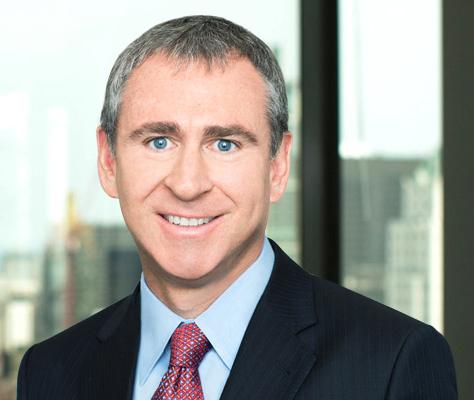
The Citadel Founder’s Real Estate Selloff Marks the End of an Era — and Signals a Broader Wealth Migration
When Ken Griffin purchased a full-floor penthouse at Chicago’s Park Tower in 2000, the Citadel founder was building what would become one of the world’s most powerful hedge fund empires. Twenty-five years later, that same property — his last remaining real estate holding in the Windy City — has gone under contract for $12.5 million, punctuating a systematic divestment that began when Griffin relocated his financial empire to Miami in 2022.
The sale represents far more than a single real estate transaction. It symbolizes the end of Griffin’s three-decade presence in Chicago and stands as perhaps the most high-profile example of wealthy Americans abandoning major metropolitan areas for what they perceive as safer, more business-friendly environments in the Sun Belt.
A Departure Driven by Disillusionment
Griffin has been characteristically blunt about his reasons for leaving. At the America Business Forum in November 2025, the billionaire described Chicago as “a failed city-state,” recounting harrowing personal experiences with urban violence. “I had 25 bullet holes in the front of my building where I lived,” Griffin told the audience. “I had two colleagues who had bullets fly through their cars. You can’t live in a city awash with violent crime.”
The contrast Griffin draws between his former and current homes is stark. In Chicago, he says, dinner conversations revolved around crime, political dysfunction, and failed policies. In Miami, people talk about their children, their businesses, and their futures with genuine optimism. “Entrepreneurs are people that believe in tomorrow,” Griffin observed. “It is so great to see the optimism that we have here in Miami.”
His decision to relocate Citadel’s global headquarters wasn’t sudden. As early as 2021, Griffin warned Chicago leadership that without significant changes, his companies would leave. He even claimed to have urged Governor J.B. Pritzker to deploy the National Guard to combat street violence — advice he says was rejected over concerns about optics.
The Financial Reality of Leaving
Griffin’s Chicago property selloff has been financially painful. The Park Tower penthouse’s $12.5 million asking price represents a 20% reduction from its July listing of $15.75 million — and while Griffin originally paid $6.9 million for the unit in 2000, that figure translates to roughly $13 million in today’s dollars, meaning he’s essentially breaking even at best.
Other sales in his portfolio fared worse. At another Park Tower unit one floor below, Griffin took a $3.8 million loss. A Waldorf Astoria condo sold at a $3 million deficit. In late 2024, Governor Pritzker — Griffin’s longtime political rival — purchased two units from him at 9 West Walton Street for $19 million, approximately $15 million less than Griffin had invested in them.
The losses reflect a broader malaise in Chicago’s downtown luxury condo market. Since the pandemic, high-end properties have struggled to find buyers, with median prices for condos above $1 million declining more than 9% between 2021 and 2024. Work-from-home policies, crime concerns, and population loss have combined to suppress demand in ways not seen in decades.
Building a New Empire in the Sunshine State
While divesting from Chicago, Griffin has bet heavily on South Florida’s future. Citadel’s planned headquarters tower in Miami’s Brickell financial district — originally budgeted at $1 billion — has ballooned to an estimated $2.5 billion due to construction inflation and an expanded scope. The 54-story supertall structure will rise approximately 1,049 feet, incorporating 1.3 million square feet of Class-A office space and a 212-room luxury hotel.
“If we build it, they will come,” Griffin said confidently at a recent conference, noting Miami’s acute shortage of premium office space. The tower, designed by Foster + Partners and developed in partnership with Related Companies, is expected to begin construction in 2026 and become one of the most expensive private office developments in American history.
Griffin’s enthusiasm for his adopted home extends beyond commercial real estate. He’s invested $55 million in crime-reduction initiatives, police training programs, and workforce development in both Chicago and Miami. His $107 million waterfront estate in Coconut Grove — purchased from philanthropist Adrienne Arsht — sits in a neighborhood where police reported just two dozen crimes in the second half of 2022, mostly minor property offenses.
Part of a Larger Migration
Griffin’s relocation exemplifies a significant demographic shift reshaping American prosperity. Texas and Florida have emerged as the nation’s primary destinations for domestic migration, each gaining over half a million residents annually. Meanwhile, New York and California experienced the largest net losses of high-earning young professionals, with New York losing more than 5,000 households earning $200,000 or above among 26-to-35-year-olds in recent years.
The appeal is multifaceted. Florida and Texas levy no state income tax — a substantial advantage for wealth preservation. Both states have emphasized public safety and business-friendly regulatory environments. Real estate appreciation in South Florida has outpaced most of the country over the past seven years, providing additional financial incentive for relocation.
West Palm Beach and Miami have surpassed New York City as the world’s fastest-growing wealth hubs, with millionaire populations increasing by triple digits over the past decade. Florida’s population is projected to exceed 24 million by 2027, growing by more than 200,000 residents annually — many of them refugees from high-tax, high-crime metropolitan areas.
What’s Left Behind
Chicago faces significant challenges in the wake of departures like Griffin’s. The city’s pension funds carry approximately $37.2 billion in unfunded liabilities. COVID relief funds have been exhausted. Critics worry that declining tax revenue from wealthy residents, combined with rising operational costs and political instability, creates a self-reinforcing cycle of decline.
Real estate agents who work the city’s upper-end market acknowledge that Griffin’s very public exodus sent a powerful message. “He gave a signal that he is over Chicago and doesn’t have any confidence in Chicago,” one agent observed. “Ken Griffin basically made a statement to the wealthy community in Chicago.”
Yet the broader Chicago housing market tells a more nuanced story. While downtown luxury condos struggle, the metropolitan area’s overall home prices rose approximately 7% in 2024. Neighborhoods outside the central business district remain attractive to families priced out of coastal cities, and some analysts detect early signs of stabilization in even the hardest-hit segments.
The End of an Era
Ken Griffin’s final Chicago property sale closes a chapter that began when he launched Citadel from a one-bedroom apartment in 1990. The hedge fund he built there now manages approximately $65 billion in assets. Citadel Securities handles more than 20% of U.S. stock trading volume. Griffin himself has accumulated a net worth exceeding $48 billion.
All of that success started in Chicago. Now it continues in Miami, where Griffin speaks of tomorrow with the enthusiasm he says Chicago lost. “South Florida has something that the rest of the world wants,” he declared recently. “Oceanfront property in a state with extraordinarily safe streets, great schools, strong sense of community, great cultural institutions.”
Whether Chicago can recapture what it once offered to entrepreneurs like Griffin remains an open question. For now, the billionaire’s departure stands as both cautionary tale and case study — evidence that even the most loyal civic stakeholders have their breaking points, and that when capital decides to move, it rarely looks back.